Tuesday, October 18, 2011

India in photos - Mahabalipuram July 2011

Our first adventure after arrival in Chennai was a weekend at Ideal Beach Resort in July 2011. My loving husband renamed it Adequate Beach Resort, because...well it was adequate if nothing else. Luckily adequate beach was close to the Shore Temple, stonemasons, and other sites. I posted some of the pictures below:

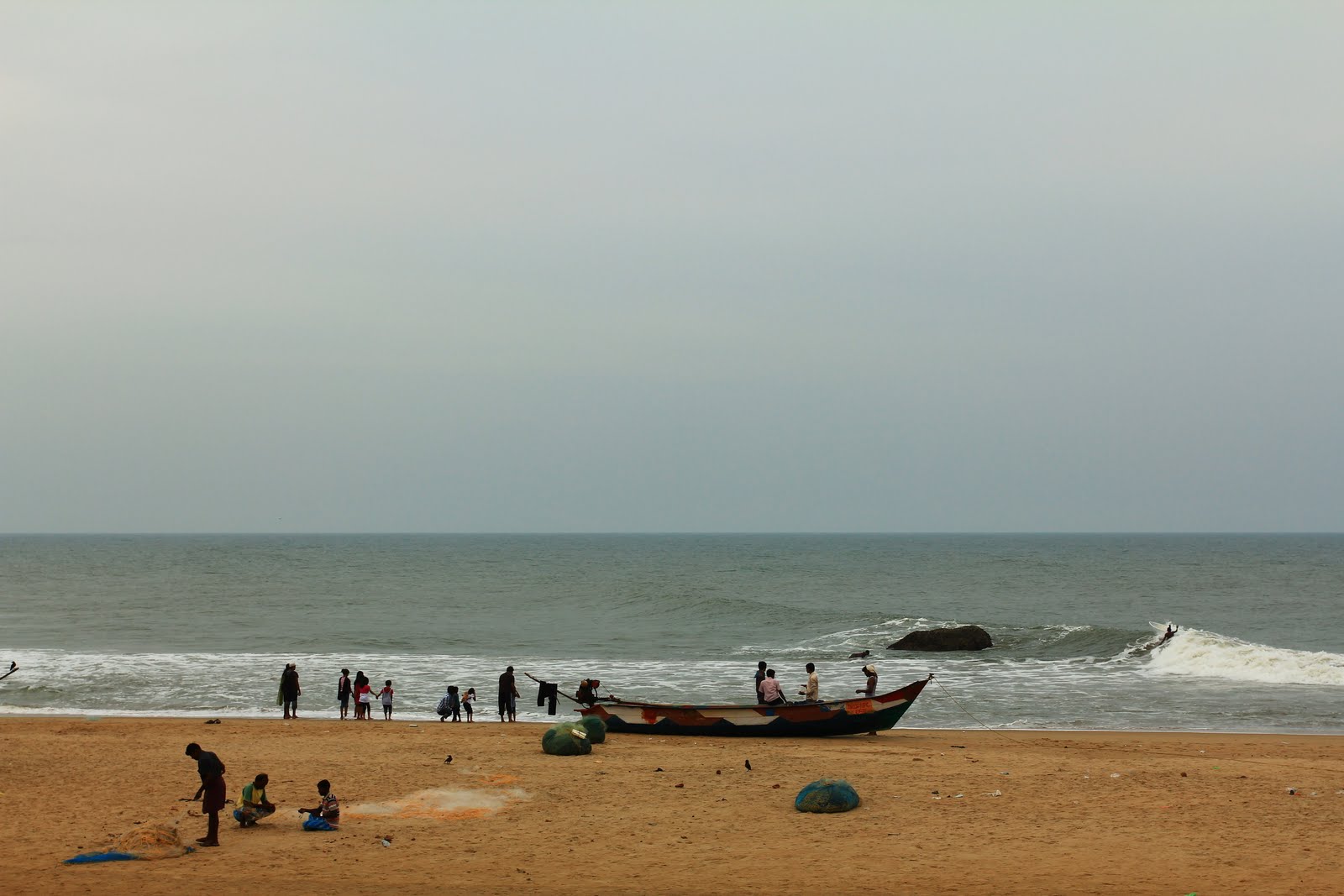
If Brighton Beach, Brooklyn, NY came to South Asia - this is it.
For some reason this complex was never consecrated

Shore Temple - the only one that survived the tsunami in 2004 - truly spectacular
Stonemasons in this town do pretty amazing work
This is the most lifelike depiction of an elephant
Ice cream and source!
I am kind of embarrassed to admit this, but the reason there is a flood of photo posts is because I figured out how to post photos on my blog...

India in photos - view from our roof in Chennai

Right before a rainstorm


India in photos - Delhi June 2011

The Red Fort during the hottest part of the day - scorching!


Wednesday, September 21, 2011

News at 11: Used Car Dealer Disappoints Consumer

I feel like the title of today's blog should be a headline in "The Onion." My husband tried to buy a used car. Since most diplomatic vehicles were already sold, we asked some questions, asked for recommendations of a reputable used car dealership, did our homework and ventured into the local used car market.

We looked at cars, we rubbed our chins and discussed cars. Although, I don't want to fool you, I know nothing about cars, besides the fact that their purpose is to get you from point A to point B. We engaged a mechanic to look at finalists and finally made up our mind. We settled on a modest 2008 Hyundai Xanto(?) with fairly low mileage. Relieved that we found a suitable vehicle to get us from many point A's to just as many point B's. We bargained and settled on a used car price that would infuse between 4 and 5 times an average Indian annual salary, which hovers at around $1200 USD. We gleefully gave a deposit of - gasp 50000 INR or just over $200 and started filling out an application with the Ministry of External Affairs (MEA) to get permission to buy a car. The MEA permission is tied to the person, you say? Well, no that is not the case in India. MEA permission to buy a car is tied to the car. So we wait, and wait, and wait. We are told, "well, just another few days and everything will be settled." We hire a driver for when we receive...may I say it out loud....our car?

Approximately, seven weeks later we finally receive a "preliminary" approval for the sale. The MEA approval depends on one little thing. Nothing really, a document which the legal owner of the car has to obtain from his local police precinct. Basically, this document will say that there are no open investigations, tickets, ect in relations to the car. Indian law requires this document to approve sales of used cars to everyone living in the country foreigners and Indian nationals. A fairly straightforward and logical procedure, unless the owner will "under no circumstances" go to the police to get the aforementioned document, which invalidates our purchase. Since the MEA permission was tied to the car and not the buyer, to buy another car we start at the beginning.

After we found out we were not getting the 2008 Huyndai Xanto, we thought again. We looked at options that minimize our risks, albeit more expensive. We decided to buy a new car - from a factory. A few of my husband's co-workers traveled down that particular car acquisition road and we decided to follow them. This is where the situation gets more Kafka-esque. We need permission from the MEA for a car that does not yet exist. The factory cannot build this non-existent car without us obtaining permission to buy this non-existent car. We will also have to pay up-front before the non-existent car gets built. Sigh.

So here we are, waiting for permission from the Indian government to buy a non-existent car.

****

In other news, I got my work authorization from the same agency lightening fast - faster than getting permission to dump 4 times the average annual salary into the local economy. The funny thing is that the MEA permission to buy a car was processed in the local MEA office in Chennai and my work permit went through Delhi. Go figure right? Government bureaucracies work in mysterious ways.

I will do a write-up on my employment process begging to end, because you know what fellow diplo dependents, there is a great big world outside of your local mission and I am living proof that finding a job in the local economy is in fact possible.

Stay tuned folks!

Monday, July 11, 2011

A few personal observations of India


A few of you wrote to me asking for my impressions on India. Full disclosure, I left to go see my amazing friend S. get married to the love of her live E. in Israel about a week after my arrival in Chennai, so my observations, while personal and authentic, cover only a brief stay in India. So here goes…

Darwinian driving rules & maximization of available space

So remember that game from the ’80 – I don’t remember the name, but the interface was pretty simple and the player needed to wade through oncoming cars. I describe driving, walking and biking in Chennai as a happy mutation between this game, whose name escapes me, and Tetris. On the other hand, if you happen to be the pedestrian in this environment, you are basically packman’s prey. The rules of driving in Chennai are simple, survival of the fittest and largest. Buses yield to no one, and I mean NO ONE, while trucks yield to buses. There exists a separate hierarchy among trucks depending on size gasoline and refuse carriers are at the top of the hierarchy, while small TATA made trucks and auto rickshaw trucks exist at the very bottom. Cars yield to trucks and buses, although this also depends on their size. SUVs have freer rein on the road than, let’s say ford fiestas. Auto rickshaws, or simply “autos”, yield to all cars, trucks and buses. Motorcycles and Mopeds yield to buses, trucks, cars, and “autos.” People who ride bikes yield to motorcycles, mopeds, “autos,” cars, trucks and buses. The pedestrian, as you may have already guessed occupies the bottom of this Darwinian road hierarchy. With sidewalks virtually non-existent, life of the pedestrian, yours truly, is at the same time adrenaline-inducing and terrifying. 

People don’t usually wear seatbelts. “Autos” do not have any seatbelts at all. Commuters make use of every available inch of seating in all vehicles. Pretty often one can spot a man, his wife and infant on the same moped, sans safety belts and helmets. Considering the Darwinian driving environment, families on bikes take serious risks getting on the road. Ahh, the “auto” quite comfortable in the heat while moving, sticky and not so fun when your driver stops at a gas station, about 25 m from when you got on and negotiated your destination and fare. Fare negotiations are a challenge. Don’t get me wrong, I am not fooling myself into believing I am getting a fair price, I am as pale as any human you may encounter in life. However I take offence at getting highway robbery rates. Having spent significant time periods in the Middle East, haggling for a moderately fair price is a way of life; otherwise the person providing you with the service will not respect you. I stand on principle. Speaking a few words of Tamil both generates good will and easier rate negotiation with “auto” drivers. Even though, the stakes of this price negotiation are minimal, I haggle with pride.

Pants optional

Due to the extremely hot and humid climate in Chennai and other parts of India, some men wear lungi instead of pants. A lungi, also known as a sarong, is a long garment worn around the waist by South Asian men. I knew that, but what I did not know is that there is a summer knee length lungi, also popular in town. Rewrapping your lungi in the middle of the street is also perfectly acceptable. Watch out girls, if your legs are not covered, you get stares from men. With that said, unlike in Delhi men will not harass you. 

Malls & Bathrooms

The malls in Chennai encompass more space than I noticed in any other public or retail spaces in this city. Malls here take up significant space and feature a wide selection of Western-style women’s clothing. However, most people you encounter on the streets, including expats do not wear Western-style clothing. The very humid and hot climate of Chennai and its surrounding areas makes it virtually impossible to wear fabrics and styles which we wear in the West. Besides the lack of comfort in with type of clothing, Western-style clothing does not hold up to the number of washes needed to keep clothes fresh and clean. So who actually buys these clothes? How do these stores justify paying their rent? I am not sure yet, but when I find out, I will definitely share my findings. Oh, we also passed a store exclusively for grooms; I offered to get married to A. once again just to see him with in full South Indian wedding regalia on a white horse. Also I believe I can totally rock the red and gold sari, with my weight in gold jewelry.

Last weekend A. and I went to our first movie in India and we went to see X-men. The movie theater felt like a nightclub, complete with a bouncer at the door, wonderful AC, and pumping techno. The screening rooms had seats for couples and singles, a first for me. Halfway through the movie we got an intermission followed by about 20 minutes of ads from local merchants. I went to the toilet and felt like a queen. I literally sat on a toilet throne, installed on a raised platform. The stalls also featured a yet to be connected sink, dryer, and a decorative fountain. The working sinks in the more public area of the ladies’ room were pretty cool. There were no sinks per say, just a solid slab of marble with water spouts positioned just above the slab. The motion activated water spouts and water drained behind the slab of marble to a hidden drainage ditch. Oh yes, our tickets cost $6 for the two of us.

Miscellaneous

Before departure, our State Department nurse instructed us to brush our teeth with filtered water as unfiltered water is not so safe in this neck of the woods. We’ve also been ordering drinks with no ice as a precaution. I went shopping with two of my husband’s co-workers and brought my first salwar kameez (kurta and dupatta as its called in Chennai). The outfit includes a fuchsia pair of pants – I think more fabric went in the making of the pants than the shirt (kurta). The pants can comfortably fit three of me. Our cook-maid remarked that I was wearing a lunghi, which is what men wear here in lieu of pants. I was wearing a halter dress which ties around my neck. Watch out ladies, apparently I am now a trend setter!
Enough with the personal stuff, next up – markets!

Friday, June 17, 2011

Namaste & Vannakam India!


Packing out seems like a distant bad dream. It has been a while since I wrote and I think I am long overdue. Since the last time you tuned in, the following things happened: we packed all of our things and three separate groups of our stuff left our apartment. We put kitty into a minimum-security prison for cat crimes she did not commit and will all be (hopefully) reunited in India on Saturday. My husband and I attended his sister’s wedding at Martha’s Vineyard and left on our deferred honeymoon in Spain. Spain was gorgeous and we got to see Seville, Granada, Cordoba, stay in a little town on Costa del Sol, drove terrifying mountain roads to Malaga, Cadiz, and Ronda. We ended our wonderful vacation in Madrid, where we got to experience a natural phenomenon I don’t anticipate in India – feeling cold in the rain. All in all, the trip turned out wonderfully

After a minor skirmish with Lufthansa over not having a paper ticket – does anyone travel on paper tickets anymore – we left for Frankfurt. In Frankfurt we boarded another flight bound for Delhi. The crew called for people in need of special help to board, followed by first and business classes, and then we waited and waited as the crowd by the boarding counter swelled. This was no organized line with individuals and families standing neatly behind each other, it was more like a mushroom cloud made up of people shifting and jostling for a space a few inches ahead of each other. We watched the anxious crowd too tired to join. In about 30 minutes however we said to each other, “well we won’t be the suckers” and joined the surging crowd. About ten minutes later general boarding was finally called and the remaining 5 passengers stood up to board.

In Delhi, we stepped out of the Indira Gandhi International Airport at a brisk 1:30 AM, into what felt like a blow dryer set on high. I had a similar feeling in Eilat, although I think it wasn’t as humid. So, no real chance of feeling cold for the next two years! Delhi was oppressively hot, I mean look I’ve been to places where I sweated my share, but the heat was pretty intense. We were in Delhi for tow days, Sunday and Monday. On Sunday we went sightseeing and on Monday both my husband and I met our respective new bosses.

A friend, who just arrived for a job in Delhi a few days ahead of us, joined us for some sightseeing. We booked a car with a driver and AC. The AC worked, but I think it was no match for midday heat. Every time we passed by a traffic police post, our driver strapped his seat-belt across his lap, stopping just short of clicking it in place. We arrived at the Red Fort during the hottest part of the day and encountered a snaking line as far as our eyes could see. On a side-note, entering the museum compound we all went through metal detectors – they were turned off. So yeah, back to that line, enormous. As the three of us faced each other in the midday heat we exchanged the same thought, standing in this line we will drop dead before we reach the fort gates.

We brought tickets at a hugely inflated price for foreign tourists 25 times the cost of a regular ticket. Funny thing, people with diplomatic IDs pay local prices for admission to museums, while diplomatic passports do not grant the bearer the same cost of admission, makes sense right? I actually don’t mind spending more on museums as I see this as a donation for upkeep. With tickets clutched in our sweaty hands we proceeded to go down a lane leading to the entrance of the fort, which had no line - it turned out that we were walking in the “ladies” section of the security line. Nearing the entrance my husband was waved into the men’s security line as we proceeded through another set of switched off metal detectors. Why? I really could not tell you.

The Red Fort, built in the 17th century by Shah Jahan, the Mughal Emperor and served as the residence for the Shah’s family. The Fort and its gardens are gorgeous, while the complex’s mosque was closed for renovation; we had plenty of ground to explore. There were not that many western tourists, they were probably smart enough to stay away at 1 PM in 115 or 120 degree heat, but there were lots of Indian families hanging out, resting in the shade and picnicking. As we wandered around the complex, a family on vacation invited us to be in their snapshots. I think I caught some Tamil words, so they might have come to the North from Tamil Nadu for vacation. It was sweet and we were flattered. There was quite a bit more staring, not of the pleasant variety. Some teenage boys kept taking pictures of my friend and I, which was a bit annoying, but maybe they have yet to discover the internet in all of its exhibitionist glory, who knows?

On Monday, we headed to the airport once more. Passengers started boarding our Air India flight to Chennai before the flight was actually announced. As passengers spotted someone in a wheelchair taken on board, they surged to the boarding counter. The flight was on time and uneventful, my favorite kind of travel. Sadly, the duration of the flight was too short for us to see the ending of a Bollywood rendition of Back to the Future. I did not even catch the name of the movie, which was deliciously over the top and had a number of well choreographed dance numbers. Bleary eyed and viciously jetlagged we arrived in Chennai at 12:30 AM. I went to the bathroom, which I rate as pretty clean for the late hour and public space. I entered the first stall and did not see toilet paper and went to the next stall, where I saw my old friend, the squat and hover toilet. Its been a while old friend, we have not met since Kyiv.

My husband’s social sponsor met us at the airport with a rather large van and driver. For those of you that switched schools, the social sponsor is your school assigned buddy; someone that shows you around the new place, explains about how things work and answers your questions. The family that sponsored our arrival is really nice and have been showing us around and letting me use their car and driver during the day for errands.

So far I really like India. I’ve had great food, it is not a problem to find veggie options on the menu and I do not need to explain what does not belong in my meal. I keep kosher and since there are no kosher restaurants and butcher, I plan to stay vegetarian occasionally eating fish. Prior to my arrival, I received a written offer to work as an economist for an economic consulting firm. The bad news is that I can’t start working yet. I need to receive my diplomatic ID and then apply for a work permit. The dip ID takes at least 3 weeks and work authorization from 1-6 months. So for now I am just hanging out and hoping against hope that the administrative process will not take too long.

I have been unpacking and making things neater around our fabulously large apartment. After grad school, housemates and our 600 sq ft apt in NOVA, our new place is big enough that if we wanted to we could roller skate from room to room. Our first shipment is supposed to arrive sometime next week while the large shipment will probably come at the beginning of August. I have been trying to set things up around the house, but was surprised to learn that I actually cannot put in maintenance orders or set up our home internet service. “Madam cannot place orders. Madam’s husband must come and speak to me in my office and then send a confirmation email with request.” Hmmm, ok but here is the catch, madam’s husband has a day job with, you know meetings, and trainings, and such, and at the moment madam has the time to take care of these things. Thus far the aforementioned argument has not worked. Recently, our really nice and friendly downstairs neighbor offered to share her wireless with us until we get out internet hooked up and I accepted the offer enthusiastically. Having access to internet feels great. Last but not least, currently in rolling blackout mode, I am quite grateful to our landlord for electrical generators.

On Monday, I leave to attend the wedding of a dear friend S. S. held one of our chuppah (wedding canopy) poles and has been a wonderful friend. I am honored and overjoyed to share her wedding celebrations. I arrive with ample time to see other friends and family. Hopefully, shortly after my return I will hold my brand new and shiny dip ID in my sweaty hands. Speaking of schwitzing, my beautician in NY was absolutely right, humidity does wonders for one’s skin, helping us fight mother - nature and banishing wrinkles for just a little longer. Cheers from India!

Tuesday, May 10, 2011

Summer is in the air…


Summer means sunshine, frilly dresses, sandals, hats, burgeoning complexes about one’s appearance in a bikini, and of course ample sunscreen protection. I got all those things covered, but let’s face I am not the kind of girl that blogs about that sort of thing. I do however want to establish my nerd-tastic street credibility, so I write about…drum roll please…free trade agreements! 

First things first, definitions; a free trade agreement establishes a relationship of free trade between two or more countries. Free trade agreements eliminate tariffs and hindrances to movement of goods and services between signatory countries. For example, NAFTA the North American Free Trade Agreement became law in 1994 removing most barriers to trade and investment between its signatory states the United States of America, Mexico, and Canada. FTAs do not necessarily mean that capital and labor will move freely between signatory states, as is the case with common market agreements. Signatory states negotiate terms of free trade agreements, with each country aiming for greatest national benefit. Free trade agreements bring with them economic winners and losers, as the case with NAFTA, but most economists agree that free trade creates a net gain for society. I think N. Gregory Mankiw said it best, "Few propositions command as much consensus among professional economists as that open world trade increases economic growth and raises living standards."

 Since 2007 India and the European Union have been negotiating a free trade agreement. The two governments completed 12 rounds of negotiations and the FTA may get signed into law either this month or at the end of June. The official name of the agreement, Broad-based Trade and Investment Agreement or the BTIA encompasses a number of industries. As much as 90% of bilateral trade would be covered by the BTIA. As part of this pact India will relax its investment rules. In 2009, India and EU’s bilateral trade relationship resulted in a flow of 53 billion Euros in goods and 16 billion Euros in services. The European Union is India’s largest trading partner. While New Delhi already completed FTAs with Japan, South Korea, and ASEAN and is conducting similar agreement negotiations with Thailand and Malaysia, the India – EU FTA is by far the most ambitious trade endeavor. 

Gains for both sides abound. Currently, the EU is struggling with economic woes such as slow growth, creeping unemployment, and let’s not touch Greece, Spain, and Portugal’s financial troubles. Through this FTA, the 27 nation bloc gains access to one of the fastest growing and dynamic economies in the world. With bilateral trade in goods and services between the EU and India growing, a free trade agreement will facilitate further expansion of each partners’ economy. For example, recently the EU granted duty free access to Bangladeshi manufacturers, flow of clothes from Bangladesh into the EU increased by an impressive 40% providing the producers with an extra $14 billion USD in a mere eight months. The Europeans recently negotiated an FTA with South Korea and are finishing up another FTA with Vietnam. The Europeans hope that the India FTA will trigger more free trade agreements across Asia.

As with any free trade agreement, negotiations stalled with regard to several industries. Negotiations regarding European access to markets of auto and auto components, wines and spirits, agriculture, stricter enforcement of property rights, as well as to insurance and banking sectors. First, I will address intellectual property rights and why they matter. Second, I want to focus on access to insurance and banking sectors in India. 

Generic Drugs


The European Union has been pushing for the Indian government to tighten intellectual property laws which will adversely affect India’s pharmaceutical industry. This past week India’s Prime Minister Singh instructed negotiators not to compromise the country’s stand on IPRs (intellectual property rights) with a special emphasis on pharmaceuticals. 

India and Israel are the world’s leading generic drug makers. Canada, South Africa, Brazil and Thailand also developed fairly large generic drug industries. Producing generic drugs in India costs about 35 – 40 % less than generic drugs produced in the US and the EU. Some estimates put India’s pharmaceutical industry at over $20 billion USD. About 50% of generic drugs produced in India leave the country for sale in Africa and Asia. Indian pharmaceutical companies provide antiviral medications to AIDS patients in a variety of African, Asian and South American countries at a fraction of the price of name brand medicines. 

According to Sen Gupta of the Delhi Science Forum, an NGO, from 2003 to 2008 the Indian pharmaceutical industry provided about 80% of medicines used by internationally funded AIDS treatment programs. South Africa, Brazil and Thailand all use Indian made antiviral medicines to run HIV treatment programs. Thailand, a country lauded for its expansive public health system may be adversely affected by stricter IPR regulation in India. With a public health system that covers approximately 96% of Thailand’s population, increases in drug prices may put the affordability of such a government safety net system into question. 

Implementation of stricter IPR regulation in India will result in price increases of generic drugs that treat heart disease and cancer, as well as managing AIDS. As things stand, the Indian government negotiators will not go beyond domestic law and agreements signed with the WTO. With respect to taking a stricter stance on IPRs, the Europeans want data exclusivity to be part of the FTA. When a drug manufacturer, both name brand and generic, wants to introduce a drug to the market, the company needs to show clinical data that this drug is safe for public consumption. After patents expire generic drug makers use the same clinical data submitted by name brand drug manufacturers to show that their generic drugs are safe for consumption. 

Data exclusivity on drugs means that the clinical safety data submitted for approval of a drug belongs exclusively to the company that submits this data. Thus with data exclusivity rules in place, after a patent of a name brand drug expires, generic drug makers will not be able to use clinical trials associated with that drug and patent to prove that the drug’s generic version is safe for consumption. Why does that matter? Generic drug makers will need to conduct their own clinical trials, which take time, labor and expense. Therefore data exclusivity rules will delay genetic medicines from entering the market. The extra expense of clinical trials the manufacturer will pass on to consumers. Additionally, if data exclusivity regulations are put in place in India, generic drugs currently produced by Indian firms will technically become illegal, since no clinical data was previously submitted, putting further stress on consumers that depend on those medicines. 

Banking and Insurance Industries

The EU negotiators also want access to Indian banking and insurance sectors. Since initial market liberalizations of the early 1990s, India’s economy grew at a healthy clip. In 2010 the Indian economy grew by 10.4%. With business booming and growth opportunities opening up every day, the banking and insurance sectors stand at the center of India’s economic growth. Start-up companies need seed money and loans, new entrants into the middle class want loans to purchase housing and other consumer goods, while other people with new disposable income think about extra financing for their children’s school fees and wedding expenses. Owners of new businesses, housing, cars and consumer goods want to insure their properties, thus it follows that demand for insurance products will also grow in this thriving economy.

Access to these growing industries in India will help the Europeans grow their own economy, as they can provide expert financial and insurance services for the growing Indian economy. If India opens up its banking and insurance to the EU opportunities for the Europeans abound. However, India has been very careful about opening its markets, careful at calibrating local employment and industrial demands while taking advantage of opportunities offered by foreign investments and experts. Currently, foreign firms such as large supermarket chains and furniture stores have had no success in accessing local retail markets. 

As any trade agreement, the India – EU FTA will bring tremendous growth opportunities for both the Europeans and Indians, however as any economic policy the agreement will also negatively affect the livelihoods of people in both countries. With that said, the estimated benefit for both partners of this FTA amounts to a boost of 160 billion Euros by 2015, a sizable net gain for society.
  
Sources:

Balakrishnan, Reghu “Pharma MNCs take JV route for IndiaThe Business Standard. 17 April 2011 <http://www.business-standard.com/india/news/pharma-mncs-take-jv-route-for-india/432494/>

Chatterjee, Patralekha “India-EU free-trade pact could stifle generics industry.The Lancet. 16 April 2011. Vol. 377 Issue 9774, p1305-1306.

Chatterjee, Patralekha “India combats confusion over counterfeit drugsThe Lancet. 13 February 2011 <http://www.thelancetglobalhealthnetwork.com/archives/723>

Devraj, Rajeet “INDIA: EU Trade Deal May Curb Affordable Drug Supply | IBSA” IBSA. 24 March 2011 <http://www.ibsanews.com/india-eu-trade-deal-may-curb-affordable-drug-supply/>

“EU-India free trade agreement and impact on generics” Genetics and Biosimilars Initiative. 29 April 2011 <http://www.gabionline.net/Generics/General/EU-India-free-trade-agreement-and-impact-on-generics>

Gupta, Surojit “India-EU FTA talks in crucial phase” The Times of India. 5 May 2011 <http://articles.timesofindia.indiatimes.com/2011-04-26/india-business/29474428_1_india-fta-eu-officials-senior-eu-diplomat>

“India v China: The X Factor” The Economist. 23 April 2011. <http://www.economist.com/node/18586836?story_id=18586836>

India, EU step up efforts to reach FTA this year” The Business Standard. 18 April 2011 <http://www.business-standard.com/india/news/india-eu-stepefforts-to-reach-fta-this-year/132472/on>

 “India not for IPR beyond domestic law in FTA with EU: PM” IBN  Live. 30 April 2011 <http://ibnlive.in.com/generalnewsfeed/news/india-not-for-ipr-beyond-domestic-law-in-fta-with-eu-pm/667668.html>

“India, Mercosur ‘must withstand EU pharma demands’” Pharma Times Online. 05 May 2011 <http://www.pharmatimes.com/Article/11-05-05/India_Mercosur_must_withstand_EU_pharma_demands.aspx>

Mehdudia, Sujay “PM’s Trade and Economic Committee to review trade treaties” The Hindu. 28 April 2011 <http://www.thehindu.com/business/Economy/article1818790.ece>

Mukherjee, Pranab “India not to dilute stand on intellectual property rights” The Economic Times. 2 May 2011 <http://articles.economictimes.indiatimes.com/2011-05-02/news/29496250_1_trade-pact-india-eu-bilateral-trade-intellectual-property-rights>

“No compromise in our stance on IPR, says India” Deccan Herald. 30 April 2011 <http://www.deccanherald.com/content/157977/no-compromise-our-stance-ipr.html>

Sen, Amiti “India, European Union closer to free trade agreement” The Economic Times. 13 April 2011 <http://articles.economictimes.indiatimes.com/2011-04-13/news/29413626_1_free-trade-auto-parts-partner-with-bilateral-trade>

Sharma, Vijay “PM Committee asks Commerce ministry to go easy on India-EU trade pact” Real Time News. 30 April 2011 <http://rtn.asia/314_pm-committee-asks-commerce-ministry-go-easy-india-eu-trade-pact>

Singh, Manmohan “India to talk tough on IPR issue in free trade talks with EU” The Times of India. 1 May 2011 <http://articles.timesofindia.indiatimes.com/2011-05-01/india/29492970_1_free-trade-pact-joint-study-group-largest-trading-partner>

“Singh favours strict rules for drug trade” The Telegraph. 1 May 2011. <http://www.telegraphindia.com/1110501/jsp/business/story_13925562.jsp#>

 Srivastava, Shruti “India-EU FTA likely by end of June, says commerce secy” Indian Express.com. 5 May 2011 <http://www.indianexpress.com/news/India-EU-FTA-likely-by-end-of-June--says-commerce-secy/786075/>

“The Arab spring’s chill winds” The Economist. 23 April 2011 <http://www.economist.com/node/18587630?story_id=18587630>

“Will free trade prevail?” Pharmaceutical Technology Europe; Apr2011, Vol. 23 Issue 4, p8-8, 2/3p